

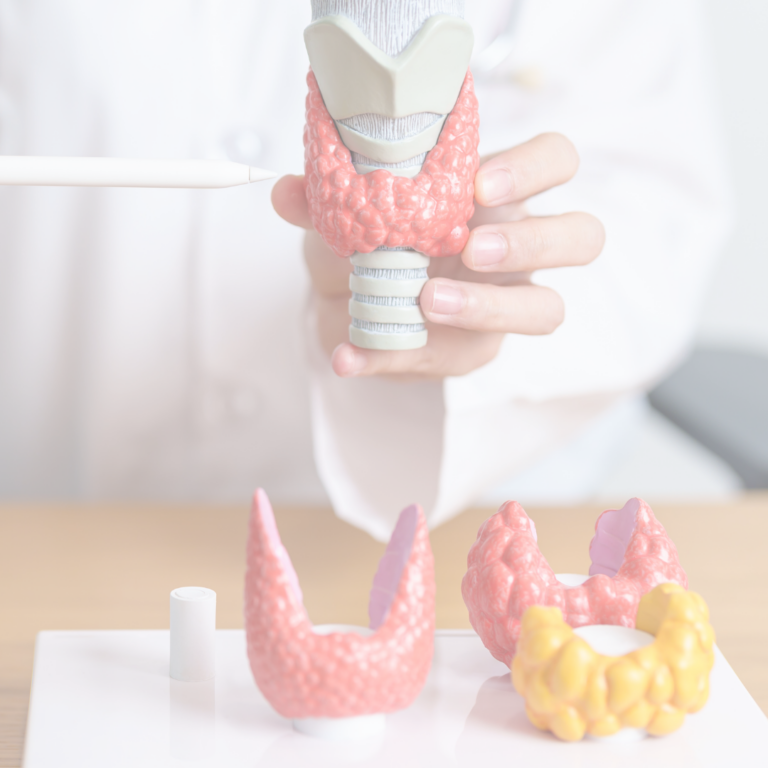
Thyroid + Sex Hormones + Adrenal Function
The brain’s hypothalamus and pituitary gland are connected to the thyroid, adrenal, + sex hormones. These areas direct and control the increase + decrease of various hormones released by the thyroid, adrenals, ovaries, + other endocrine tissues.
Thyroid troubles can arise with the natural shift of hormones, as the thyroid and ovaries are a part of this feedback loop. 2 separate but interacting endocrine systems.
HPT, Hypothalamic-Pituitary-Thyroid Axis Feedback Loop:
Low thyroid hormones T3 + T4, trigger the hypothalamus to release (TRH), stimulating the pituitary to produce thyroid stimulating hormone (TSH), which boosts thyroid hormone production, T3 + T4. Once the levels rise, the hypothalamus “shuts off” and stops secreting TRH, which in turn inhibits the pituitary gland release of TSH.
The continuous cycle maintains stable metabolism, with high TSH indicating low thyroid function (hypothyroidism) and low TSH suggesting excess (hyperthyroidism).
HPO Axis Feedback Loop:
The ovaries are the target organs of a separate system, the HPO axis, which regulates the menstrual cycle + reproduction:
- Hypothalamus: releases Gonadotropin-Releasing Hormone (GnRH).
- Pituitary Gland: releases Luteinizing Hormone (LH) and Follicle-Stimulating Hormone (FSH).
- Ovaries: produce sex steroids (estrogen, progesterone) and inhibin, which feed back to the hypothalamus + pituitary to regulate GnRH, LH, and FSH secretion. This feedback is mostly negative throughout the cycle, but becomes positive briefly to trigger ovulation.
These 2 axes are 2 separate but interacting endocrine systems. They are physiologically related + interact. Thyroid disorders can cause menstrual disturbances + infertility, as thyroid hormones affect ovarian function + vice versa.
For example:
- Thyroid hormone receptors are present in ovarian tissues, indicating a direct influence of thyroid hormones on ovarian function.
- Elevated TSH levels (hypothyroidism) can be associated with reduced ovarian reserve, + a higher risk of developing ovarian cysts.
Keep a look out for thyroid symptoms that can appear during these times below:
- Chronic Stress – when you are going through stress, it will adversely affect your thyroid gland because it is connected to your adrenal glands (your stress responders).
- If you go through long term chronic stress then the adrenal glands pump out the stress hormones cortisol + adrenaline. Too much of these hormones inhibit TSH and the conversion of T4 into T3 = low thyroid function.
- Perimenopause – estrogen, progesterone, and testosterone are in flux during this time. So, this means the fluctuations of those hormones affect messages sent to the brain regarding thyroid hormones. When less estrogen is produced, TRH may also slow down = less available T3 + T4 for our cells.
- Pregnancy – during pregnancy there is a natural shift of hormones during this time, hypo or hyperthyroidism can occur during or after pregnancy. If you have a healthy pregnancy, the pregnancy hormone hCG (human chorionic gonadotropin) + estrogen, increases thyroid hormone levels in the blood.
Stay tuned for more info.
