

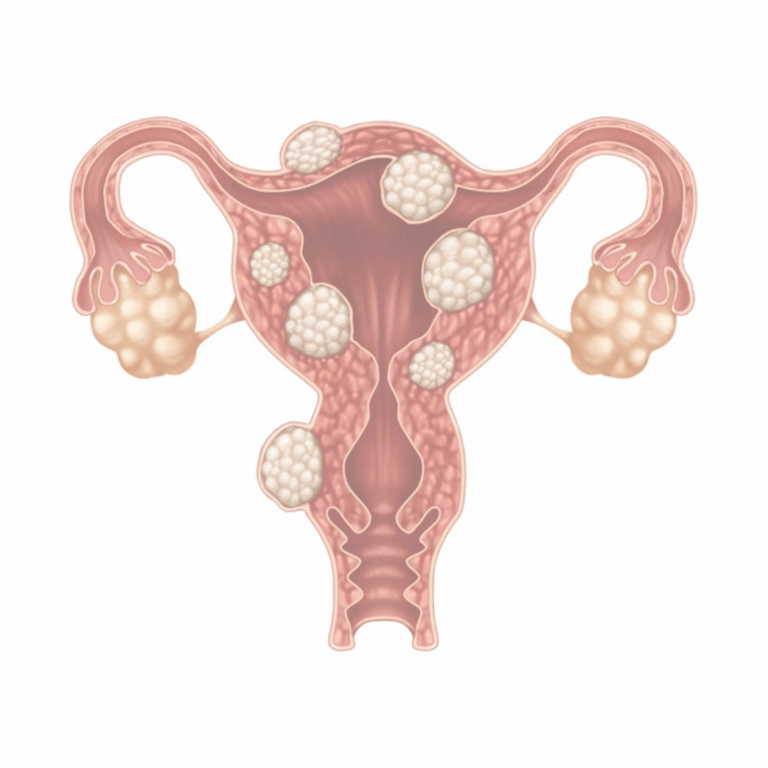
Fibroids are usually hormonally sensitive, growing in response to estrogen and progesterone. Fibroids mostly occur during the reproductive years of a female.
Most women are forced to choose between prescription drugs, or surgery that cause infertility + early menopause.
Common Symptoms Of Uterine Fibroids:
- Heavy menstrual bleeding or prolonged periods
- Frequent/irregular periods
- Pelvic pain, pressure, or discomfort
- Frequent urination, or difficulty emptying the bladder
- Pain during intercourse
- Back pain, lower, or leg pain
- Heavy prolonged uterine bleeding
- Cramps during menstrual periods
- Weight gain
- Beginning signs of clotting
- Full, enlarged of lower abdomen or abdomen size, bloating
- Dull pain and discomfort in lower abdomen
- Miscarriage
- Infertility
- Hair growth in chin areas along upper lip indicates thickening of the endometrium
- Bowel issues, constipation or diarrhea
Main Factors Leading To Fibroid Development, Growth + Spread
1. Hormonal Imbalance, Especially Estrogen Dominance
Progesterone and estrogen directly impact the spread of fibroids. Fibroid tissue contains more progesterone + estrogen receptors than normal uterine tissue. These hormones increase during the premenstrual phase in preparation for fertilization, fibroids increase in mass, + size. The same thing happens during perimenopause + menopause, when a shift in hormone levels causes hormonal imbalance, especially estrogen dominance, which is also linked to fibroid growth + spread.
2. Environmental Factors, Xenoestrogens
We are exposed to xenoestrogens in our environment and life daily, which are in pesticides, makeup, plastics, dairy. Our bodies can not differentiate between the artificial and natural versions of this hormone. Xenoestrogens have a molecular structure that mimics the effects of estrogen in the body. Increased exposure to xenoestrogens has been connected to estrogen dominance, which causes uterine fibroids.
3. Vitamin D deficiency
Vitamin D can hinder the growth of fibroid tumours. Adequate Vitamin D levels show no increase in fibroid growth or spread. Test your vitamin D. I provide Vitamin D tests for my clients.
4. Genetics
A woman’s risk of developing uterine fibroids triples if her mother had fibroids.
5. Trauma
Physical, sexual, or trauma impacts our emotions which have a biological impact. I find this another key area that needs to be examined for the patient to fully heal.
6. Stress
Negative impacts of stress, affects how our body regulates progesterone, and estrogen. Estrogen dominance and hormonal imbalances, is a result of acute, and chronic stress. Uterine fibroids are “hormonally responsive,” tumours. Low thyroid levels, can impact fibroids to multiply, and spread.
Stay tuned for part 2 + 3 of uterine fibroids, and how my treatments can help you, root causes etc… Happy Health!
